You Won’t Believe What I Found in Chennai’s Underground Art Scene
I went to Chennai expecting temples and filter coffee — but what blew my mind was its thriving underground art culture. Hidden alleyways burst with murals, forgotten colonial buildings host indie exhibitions, and traditional bronze craft meets modern street expression. This isn’t just South India’s cultural heartbeat — it’s a quiet revolution. If you think Indian art stops at classical dance, trust me, you’re missing half the story. Let’s dive into the unexpected soul of Chennai.
The Pulse of a Creative City
Chennai has long been celebrated as a guardian of South Indian tradition, where Bharatanatyam rhythms echo through temple courtyards and Carnatic concerts fill the air during Margazhi season. Yet beneath this well-known cultural surface lies a dynamic, evolving artistic pulse driven by a new generation of creators. This isn’t a rejection of heritage — rather, it’s a reimagining. Young artists, designers, and curators are reshaping the city’s identity by blending centuries-old customs with contemporary vision, turning Chennai into a living canvas of creative dialogue.
What makes this transformation so compelling is its organic nature. Unlike the curated spectacle of major metropolitan art scenes, Chennai’s underground movement thrives in modest spaces — converted homes, repurposed warehouses, and even abandoned corridors. Independent galleries such as Gallery Vayu and The Artist’s Kitchen operate outside the commercial spotlight, prioritizing authenticity over profit. These spaces are often run by artists themselves, fostering intimate connections between creator and viewer. The result is a community-centered art culture where experimentation is encouraged and accessibility is paramount.
Simultaneously, established institutions are beginning to recognize and support this shift. The Government College of Fine Arts, one of India’s oldest art schools, now hosts student-led exhibitions that challenge traditional forms. Its graduates are not only mastering classical techniques but also exploring digital media, performance art, and social commentary. This fusion of academic rigor and personal expression reflects a broader trend: Chennai is no longer content to be seen only as a preserver of tradition. It is becoming a city that dares to innovate while honoring its roots.
For visitors, this means encountering art not just in formal settings but woven into the daily rhythm of life. A sculpture might appear overnight in a roadside niche. A poetry reading could unfold in a neighborhood park. These moments are unannounced, uncommercialized, and deeply human. They reflect a city where creativity isn’t confined to galleries — it’s part of the air you breathe.
Street Art Where You Least Expect It
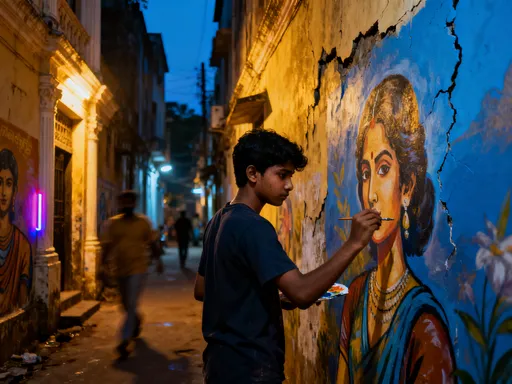
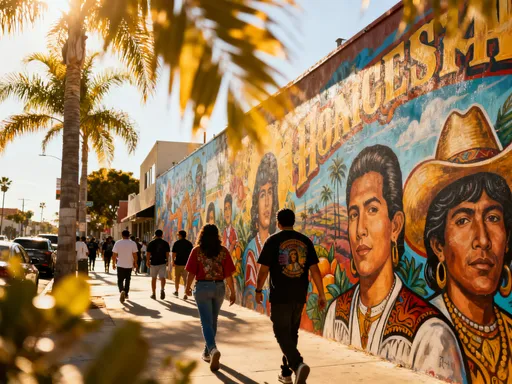
One of the most exhilarating aspects of Chennai’s underground art scene is its embrace of public space. Street art, once viewed with suspicion in conservative urban environments, has found a welcoming home here. In districts like T. Nagar, George Town, and Mylapore, walls that once bore political slogans or faded advertisements now showcase vibrant murals that tell stories of identity, ecology, and social change. These artworks transform mundane cityscapes into open-air galleries, inviting passersby to pause, reflect, and connect.
The Chennai Street Art Project, a collective of local and visiting artists, has played a pivotal role in this transformation. Since its inception, the group has painted over fifty large-scale murals across the city, often in collaboration with residents and community organizations. Their works feature bold colors, intricate patterns, and symbolic imagery — a nod to Tamil Nadu’s rich textile and temple art traditions. One striking piece in George Town depicts a fisherwoman gazing toward the sea, her sari woven with wave-like motifs that double as sound waves, symbolizing the enduring voice of coastal communities in the face of urbanization.
What sets Chennai’s street art apart is its emphasis on storytelling and local relevance. Unlike generic graffiti that prioritizes style over substance, these murals are deeply rooted in place. A wall in Mylapore might honor a forgotten poet from the Sangam era, while another in Royapuram celebrates the resilience of railway workers. This contextual depth gives the art a sense of permanence, even when painted on temporary surfaces. It’s not vandalism — it’s visual storytelling with purpose.
For travelers, discovering these works feels like uncovering hidden treasures. There’s no single trail to follow, though community-led walking tours increasingly highlight key pieces. The best approach is to wander with curiosity. Turn down a narrow lane in T. Nagar after shopping for silk sarees, and you might stumble upon a mural of a dancing peacock made entirely of recycled bottle caps. These surprises are part of the city’s charm, offering moments of wonder in the most ordinary settings.
Hidden Galleries in Heritage Walls
While street art brings creativity to the streets, Chennai’s love affair with art extends into its architectural heritage. Scattered across the city are intimate galleries nestled within colonial-era homes, heritage bungalows, and even centuries-old mansions. These spaces do more than display art — they create immersive experiences where history, architecture, and contemporary expression converge.
DakshinaChitra, though technically located just outside the city, exemplifies this blend. Originally a museum of South Indian life, it now hosts rotating pop-up exhibitions by emerging artists. A recent installation transformed a traditional Chettinad-style courtyard into a meditative sound-and-light environment, where shadows danced to recorded lullabies sung by grandmothers from rural Tamil Nadu. The setting amplified the emotional impact, proving that context is as important as content in art presentation.
Within Chennai proper, similar transformations are underway. In the quiet neighborhood of Alwarpet, an early 20th-century bungalow now serves as a rotating artist residency and exhibition space. Its high ceilings, teak doors, and terrazzo floors provide a dignified backdrop for experimental works — from textile installations to interactive digital projections. The contrast between the building’s stately past and the boldness of the art inside creates a powerful dialogue between old and new.
These hidden galleries thrive on discretion. They rarely advertise widely, relying instead on word-of-mouth and social media buzz among art enthusiasts. This exclusivity isn’t elitist — it’s protective. By keeping crowds small, curators ensure that visitors engage meaningfully with the art. It’s not about ticking off a checklist; it’s about slowing down, observing, and allowing the work to unfold. For a traveler seeking depth over spectacle, these spaces offer a rare kind of intimacy.
Living Traditions: From Bronze to Digital
Chennai’s art scene doesn’t just look forward — it carries forward. Nowhere is this more evident than in the evolution of traditional craftsmanship. In Swamimalai, a town less than 300 kilometers away known for its centuries-old bronze casting of Nataraja and other deities, a quiet revolution is underway. While master artisans continue to use the lost-wax method passed down through generations, young apprentices are introducing digital tools to reimagine these sacred forms.
Using 3D modeling software, artists can now design intricate sculptures before casting them in metal. This doesn’t replace the handmade process — instead, it enhances precision and allows for experimental variations. One artist, trained in both classical sculpture and digital design, created a series of miniature Nataraja figures in motion, each capturing a different phase of the cosmic dance. When arranged in sequence, they resemble a flipbook, bridging ancient symbolism with modern animation.
Augmented reality is also entering the craft space. Visitors to certain studios can now use a tablet to see how a bronze idol would look in their home, or watch a digital overlay of the casting process come to life on a physical mold. These innovations make the art more accessible to younger audiences while preserving the integrity of the technique. For families traveling with children, this blend of tradition and technology offers an engaging way to connect with cultural heritage.
The significance of this evolution goes beyond aesthetics. It ensures that traditional crafts remain economically viable and culturally relevant. When young people see that their ancestral skills can adapt to modern tools and markets, they’re more likely to continue the lineage. In this way, Chennai’s underground art scene isn’t just about rebellion or novelty — it’s about continuity, redefined.
Cultural Crossroads: Music, Dance, and Beyond
Art in Chennai isn’t limited to the visual. The city’s underground spirit extends to performance, where innovation quietly challenges convention. While Bharatanatyam and Carnatic music remain pillars of cultural life, a growing number of artists are experimenting with fusion, blending classical forms with jazz, electronic music, and global rhythms.
Venues like the KM Music Conservatory, founded by composer A.R. Rahman, have become incubators for this genre-defying work. Here, students trained in Carnatic vocals collaborate with drummers influenced by West African polyrhythms or producers working with ambient synth textures. The results are performances that feel both rooted and revolutionary — a raga might unfold over a minimalist beat, or a traditional thillana could be reinterpreted with live looping and vocal effects.
Smaller spaces like cultural cafes and independent theaters also play a vital role. In one such venue in Nungambakkam, a monthly series called “Raga & Roots” features intimate concerts where musicians deconstruct classical pieces in real time, explaining their improvisational choices to the audience. This transparency breaks down the perceived barrier between expert and listener, making classical music feel approachable rather than intimidating.
Dance, too, is being reimagined. Contemporary choreographers are using Bharatanatyam vocabulary to tell modern stories — about migration, environmental loss, or personal identity. One powerful solo performance explored the experience of women returning to rural villages after working in cities, using mudras to symbolize both connection and dislocation. These works don’t abandon tradition; they expand its emotional range.
For visitors, attending such performances offers a rare glimpse into the living evolution of Indian culture. It’s not museum-piece art — it’s art in motion, questioning, growing. And because these shows often take place in small venues, audiences leave feeling not just entertained, but included in the creative process.
How to Experience It Like a Local
To truly engage with Chennai’s underground art scene, timing and approach matter. The best moments to visit are during cultural festivals that spotlight emerging talent. The Chennai Photo Biennale, held every two years, transforms public spaces into immersive photographic exhibitions, often featuring work by young women and rural artists. Similarly, Vasanta Habba, a spring festival hosted at cultural centers across the city, includes art walks, live demonstrations, and pop-up performances in gardens and courtyards.
For a more personal experience, seek out community-led walking tours. Organizations like Chennai Metro Heritage and local art collectives offer guided explorations of street art zones, heritage buildings, and artist neighborhoods. These tours are led by residents who know the stories behind the murals and can introduce you to artists in their studios. Unlike commercial sightseeing, these experiences prioritize connection over convenience.
When visiting galleries or attending performances, remember that many spaces operate on a donation or “suggested contribution” basis. Bringing a small offering — whether monetary or a simple thank-you note — is a meaningful way to support the community. Equally important is respectful engagement. Ask before taking photos of artists at work, and listen more than you speak. These spaces thrive on mutual respect, not tourism-as-consumption.
Practical tools can also enhance your journey. Download local art maps created by cultural nonprofits, or follow Instagram accounts like @chennaicreative or @tamilartwatch for real-time updates on exhibitions and pop-ups. Many events are announced just days in advance, so staying connected helps you catch fleeting opportunities. And don’t rely solely on GPS — some of the best discoveries happen when you get slightly lost in a heritage neighborhood and follow the sound of a veena practice or the scent of coffee from a cultural cafe.
Why This Side of Chennai Matters
Chennai’s underground art scene is more than a collection of murals, galleries, and performances. It represents a quiet but powerful assertion of cultural identity in a rapidly changing world. In an era where global cities risk becoming homogenized, Chennai’s artists are proving that tradition and innovation are not opposites — they are allies. By honoring the past while fearlessly exploring the future, they are crafting a cultural narrative that is both rooted and resilient.
This grassroots creativity also plays a vital role in urban well-being. Art spaces become sanctuaries in crowded cities — places where people can reflect, connect, and find meaning. For women and young people, in particular, these communities offer platforms for expression and agency. A mural painted by a teenage girl in Royapuram isn’t just art; it’s a declaration of presence in a city that often overlooks her voice.
Supporting such ecosystems matters. When travelers choose to explore beyond the guidebook — to step into a hidden gallery, attend an experimental concert, or simply pause before a street mural — they contribute to a larger movement. They help sustain spaces that might otherwise vanish under the pressure of commercial development. And in doing so, they become part of the story.
So the next time you plan a trip to South India, don’t just pack for temple visits and beach walks. Bring curiosity. Bring quiet attention. Let Chennai surprise you. Because beneath its familiar surface beats an artistic soul — bold, tender, and quietly transforming the way we understand Indian culture. To see it is to witness not just a city, but a living, breathing work of art in progress.