You Won’t Believe These Hidden Art Spaces in Germany’s Rhine Valley
Have you ever wandered through a valley where every turn feels like stepping into a painting? The Rhine Valley isn’t just castles and vineyards—its art spaces are quietly revolutionary. I was blown away by how creativity blends with history here. From repurposed medieval buildings to open-air installations along the river, these immersive experiences redefine travel. This is more than sightseeing—it’s feeling the pulse of culture beneath your feet. Every cobblestone path, every sun-dappled terrace, seems to whisper stories not only of emperors and vintners but of artists who have found sanctuary in this storied landscape. What makes the Rhine Valley truly special is not merely what you see, but how you feel—connected, curious, and deeply present.
Discovering the Soul of the Rhine: Where Art Meets Landscape
The Rhine Valley has long enchanted travelers with its dramatic scenery—towering cliffs cloaked in forest, the serpentine glide of the river below, and vineyards cascading down sun-facing slopes like green waterfalls. This natural theater does more than please the eye; it sets the emotional tone for artistic expression. The landscape itself becomes a collaborator in the creative process, offering textures, light, and silence that few urban studios can match. Artists drawn to this region often speak of a certain stillness in the air, a quality of light at dawn and dusk that seems to gild every leaf and stone, inspiring work that is both introspective and expansive.
It is no accident that some of the most compelling art spaces here are seamlessly integrated into the environment. A sculpture might emerge from a curtain of ivy, or a sound installation echo softly across a meadow at twilight. These works do not dominate the landscape—they respond to it. The valley’s topography, shaped by millennia of geological forces and centuries of human cultivation, provides a dynamic canvas. In spring, when cherry blossoms drift over terraced vine rows, installations often reflect themes of transience and renewal. In autumn, when the hills glow in amber and crimson, artists explore harvest, memory, and legacy. The rhythm of the seasons becomes part of the exhibition cycle.
What makes this synergy powerful is accessibility. Unlike remote wilderness art projects that require arduous hikes, the Rhine Valley’s creative spaces are nestled within walking distance of village centers, river paths, and train stops. Families can stumble upon a kinetic wind sculpture while strolling along the promenade in St. Goar, or children might laugh at a whimsical metal creature half-buried in a hillside garden near Oberwesel. The art does not demand reverence—it invites interaction, wonder, and conversation. This blend of natural beauty and thoughtful artistic intervention creates an atmosphere where culture feels alive, not preserved behind glass.
Beyond Castles: The Rise of Immersive Art in Historic Settings
While tourists flock to Neuschwanstein and Marksburg, a quieter revolution is unfolding in the Rhine’s lesser-known stone chambers and forgotten structures. Abandoned watchtowers, deconsecrated chapels, and disused granaries—once overlooked or left to decay—are being reimagined as intimate venues for contemporary art. These transformations do not erase history; instead, they create a dialogue between past and present. A single beam of light slicing across a 12th-century vaulted ceiling can turn centuries of silence into a moment of revelation. A modern textile installation draped over ancient timber beams whispers of continuity, not contrast.
In the village of Kaub, a former customs house on the riverbank now hosts rotating exhibitions that explore themes of migration, trade, and identity—subjects deeply rooted in the Rhine’s legacy as a cultural and economic artery. Visitors walk through rooms where original stone walls are juxtaposed with digital projections mapping historical trade routes. The scent of old wood mingles with the faint hum of audio art, creating a multisensory journey. There is no formal gallery signage, no velvet ropes—just space to wander, reflect, and connect.
Similarly, in Boppard, a Roman watchtower embedded in the town’s medieval fortifications has become an experimental space for sound and light artists. During summer evenings, locals and visitors gather at dusk to experience short-duration installations that last only an hour, timed with the setting sun. The impermanence of the art mirrors the fleeting nature of travel itself—what you witness may never be seen in quite the same way again. These spaces thrive on intimacy and authenticity, offering an antidote to the crowded, commercialized attractions that dominate many tourist itineraries.
The curation in these venues is often led by local collectives or independent curators with deep ties to the region. They prioritize emotional resonance over spectacle, selecting works that invite contemplation rather than viral photos. Visitors frequently encounter artists in residence, offering informal talks or demonstrations. This closeness dissolves the usual barriers between creator and audience, fostering a sense of shared discovery. In these quiet corners of the Rhine Valley, art is not a commodity—it is a conversation.
Kunstpfad Along the River: Walking Through Living Galleries
One of the most enchanting ways to experience art in the Rhine Valley is by following a Kunstpfad, or art trail—sculpture paths that meander along the riverbank, through forests, and between vineyards. These open-air galleries transform a simple walk into a journey of discovery. Unlike traditional museum visits, where art is contained and curated in sequence, the Kunstpfad embraces unpredictability. You might round a bend and find a bronze figure gazing thoughtfully at the river, or come upon a mirrored structure that reflects the sky in fragmented pieces, challenging your sense of space and direction.
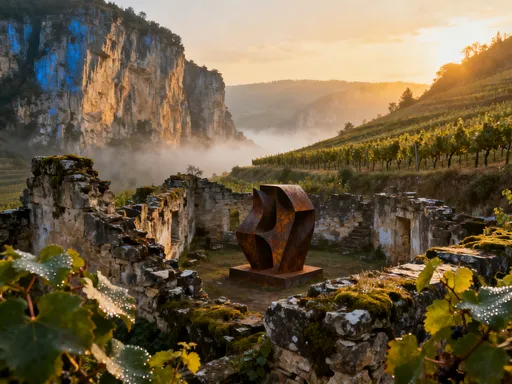
The most celebrated of these trails stretches between Oberwesel and Bacharach, a route that combines UNESCO World Heritage scenery with over two dozen site-specific installations. Each piece is carefully chosen to harmonize with its surroundings. One sculpture, made of weathered steel, appears to grow from a rocky outcrop, its rusted surface echoing the iron-rich soil of the region. Another, a series of suspended glass panels, captures and refracts sunlight throughout the day, creating shifting patterns on the path below. These works are not merely placed in nature—they are designed to evolve with it, responding to weather, season, and time of day.
Walking the Kunstpfad is as much about the journey as the destination. The path follows the Rhine’s gentle curves, offering panoramic views and frequent benches where visitors can pause, sketch, or simply absorb the moment. Families often turn the walk into a scavenger hunt, children delighting in finding the next hidden piece. For older visitors, the moderate terrain and frequent rest points make it an ideal way to stay active while engaging with culture. Signage is minimal and tasteful—often just a small plaque with the artist’s name and a QR code linking to an audio description—preserving the sense of discovery without overwhelming the senses.
What sets the Kunstpfad apart is its commitment to accessibility and inclusion. The trail is free to access year-round, and many sections are wheelchair-friendly. Local schools frequently organize field trips along the path, integrating art and environmental education. Community volunteers help maintain the installations and lead guided walks during cultural festivals. This grassroots stewardship ensures that the art remains a living part of village life, not a tourist attraction frozen in time. The Kunstpfad is more than a collection of sculptures—it is a testament to how public art can deepen our connection to place.
Artist Residencies in Vineyard Villages: Creativity Rooted in Place
Scattered among the steep vineyards and half-timbered houses of the Rhine Valley are small but vibrant artist residency programs that offer creators a rare gift: time and space to work in profound connection with a community. In villages like Rüdesheim, Assmannshausen, and Lorch, winemaking families have opened their homes and cellars to painters, ceramicists, composers, and writers. These residencies are not isolated retreats—they are embedded in daily life. Artists share meals with vintners, walk the same paths villagers take, and often incorporate local materials, stories, and traditions into their work.
One such program in Bacharach hosts two artists each season, providing lodging in a 16th-century timbered house overlooking the river. In exchange for studio space, residents are invited to lead one community workshop and contribute a piece to a seasonal exhibition held in the town hall. Last autumn, a textile artist from Hamburg created a large woven tapestry using grapevine fibers collected from pruned vines, her design inspired by medieval tapestries in nearby museums. The final piece was displayed during the town’s harvest festival, where residents recognized patterns from their own family crests and local legends.
These collaborations enrich both the artists and the communities. For the creators, the residency offers a deep immersion in a culture shaped by seasons, labor, and tradition. For villagers, the presence of artists brings fresh perspectives and renewed pride in their heritage. Children in local schools have the opportunity to meet working artists, ask questions, and even assist in small projects. This intergenerational exchange fosters a sense of cultural continuity at a time when many rural areas face depopulation and economic decline.
The residency model also supports sustainable tourism. Rather than attracting large crowds, these programs draw curious travelers who stay longer, spend locally, and seek meaningful experiences. A visitor might attend a weekend exhibition, enjoy a glass of local Riesling at a family-run café, and leave with a handmade ceramic mug from the artist’s pop-up sale. These moments of connection—simple, authentic, unhurried—are the heart of the Rhine Valley’s quiet cultural renaissance.
Museums That Break the Mold: Intimate, Experimental, Unforgettable
Away from the grand institutions of Berlin or Munich, the Rhine Valley harbors a network of small, independent museums that defy convention. These are not places of hushed galleries and roped-off masterpieces. Instead, they are intimate, often family-run spaces where art is lived, not just viewed. Tucked into half-timbered houses, converted barns, or even former bakeries, these venues offer encounters that feel personal and profound.
One such gem is a private gallery in St. Goar housed in a 15th-century merchant’s home. The owner, a retired art historian, curates a rotating selection of contemporary German painters with a focus on landscape and memory. Visitors enter through a flower-filled courtyard and are greeted not by a ticket counter, but by the curator herself, who offers tea and shares stories behind each piece. The rooms are small, the lighting soft, and the proximity to the artwork startling—some canvases hang just an arm’s length away, revealing every brushstroke and layer of paint. It is not uncommon for guests to spend over an hour in a single room, lost in conversation or quiet reflection.
Another standout is a micro-museum in Oberwesel dedicated to paper art. Housed in a former schoolhouse, the space showcases intricate cut-paper installations, shadow plays, and hand-bound books. The artist, a local teacher, works with recycled materials and often incorporates regional folklore into her designs. During school holidays, she hosts family workshops where children create their own paper sculptures using safe, age-appropriate tools. The museum does not charge admission; instead, it operates on donations and volunteer support, a model that reflects the community’s deep investment in cultural preservation.
What unites these spaces is their rejection of spectacle in favor of substance. They do not seek to impress but to invite. There are no audio guides, no timed entries, no crowds. You can linger as long as you like, return on different days, or come back next year to see what’s new. In these modest settings, art becomes a companion, a source of comfort and inspiration. For many visitors, especially women in their 30s to 50s who value authenticity and emotional depth, these small museums offer a rare kind of nourishment—one that stays with you long after you’ve left.
How to Experience These Art Spaces Like a Local
To truly appreciate the Rhine Valley’s hidden art spaces, it helps to slow down and adopt the rhythm of village life. The best time to visit is late spring through early autumn, when the weather is mild, the vineyards are lush, and many outdoor installations are at their most vibrant. Early mornings and weekdays are ideal for avoiding crowds, allowing you to wander the Kunstpfad or explore a small gallery in peaceful solitude.
Public transportation in the region is efficient and scenic. The Rhine Valley is well-served by regional trains and buses, many of which stop within walking distance of art sites. Consider purchasing a Rheinland-Pfalz Ticket, which allows unlimited travel for a group on local transport for an entire day. This pass makes it easy to hop between villages, combining art visits with wine tastings, riverside picnics, and short hikes. Cycling is another excellent option—the Rhine River Cycle Route runs parallel to the river, offering flat, well-marked paths with frequent rest stops and art trail access points.
When planning your itinerary, prioritize connection over completion. Instead of trying to see everything, choose two or three art spaces that resonate with you and allow time to absorb each one. Stop at family-run cafés for a slice of apple cake and a cup of coffee—these moments of pause often lead to unexpected conversations with locals who can point you to even more hidden gems. Many villages have tourist offices that offer free maps of art trails and residency schedules, and some even organize guided walks led by artists or curators.
Engaging with the art doesn’t require expertise. Bring a notebook, a camera, or simply your curiosity. Let yourself be surprised by a sculpture hidden in the trees or a painting that stirs a memory. Traveling like a local means embracing spontaneity, respecting the pace of the place, and recognizing that the most meaningful experiences often come from stillness, not speed.
Why This Matters: Reimagining Travel Through Immersive Art
In an age of fast travel and checklist tourism, the Rhine Valley’s hidden art spaces offer a powerful alternative—a way to travel that is slower, deeper, and more emotionally resonant. These experiences remind us that the purpose of a journey is not just to see new places, but to feel transformed by them. Standing before a sculpture that mirrors the river’s flow, or listening to a sound piece in a centuries-old tower, we are not passive observers. We become part of the story, our presence completing the work.
For women in their 30s to 50s—many of whom balance family, work, and personal aspirations—these moments of quiet awe are not a luxury. They are a form of renewal. Immersive art invites us to pause, to breathe, to reconnect with our own creativity and sensitivity. It affirms that beauty and meaning are not confined to museums or grand monuments, but can be found in a village square, a vineyard path, or a converted chapel.
The Rhine Valley’s art scene also models a sustainable, community-centered approach to culture. By repurposing historic buildings, supporting local artists, and welcoming visitors with warmth rather than commercialization, these villages show how tourism can enrich rather than exploit. They prove that cultural vitality does not depend on size or fame, but on authenticity, care, and shared humanity.
As you plan your next journey, consider stepping off the well-trodden path. Let the Rhine’s creative spirit guide you—not to a checklist of sights, but to moments of connection, wonder, and quiet joy. Slow down. Look closer. Listen. The art is not just in the spaces you visit, but in the way they change the way you see the world.