You’ve Never Seen Tunis Like This — Hidden Cityscapes Beyond the Old Medina
Tunis isn’t just about the whitewashed walls of the medina or tourist-postcard views — it’s a city pulsing with quiet alleyways, forgotten architecture, and local life that plays out far from guidebooks. I wandered off main streets and discovered a side of Tunis where time slows, colors deepen, and every corner tells a story. This is urban Tunisia not as it’s sold, but as it truly lives — raw, real, and breathtakingly beautiful. Away from souvenir stalls and guided tours, the city reveals itself in morning light filtering through shuttered windows, in the hum of neighborhood bakeries, and in the rhythm of daily routines that have shaped Tunis for generations. To know this city fully is to step beyond the expected and embrace the unscripted.
Beyond the Postcard: Rediscovering Tunis’ True Cityscape
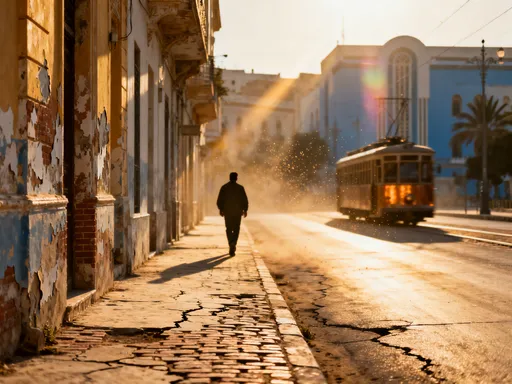
Tunis is often introduced through the lens of its UNESCO-listed medina — a maze of history, spice-scented alleys, and handcrafted lanterns. While undeniably captivating, this image captures only a fraction of the capital’s soul. The real depth of Tunis unfolds in the spaces between postcard moments: in weathered apartment blocks with peeling paint, in tram lines that cut through quiet residential zones, and in the way sunlight strikes a mosaic-tiled courtyard hidden behind an unassuming door. These are the layers that reveal a city shaped by Phoenician roots, Roman engineering, Ottoman governance, French colonial influence, and modern North African identity — all coexisting in subtle harmony.
What makes Tunis compelling is not just its past, but how that past lives in the present. A single street might feature a 1930s Art Deco cinema next to a traditional souk entrance, with a modern café serving mint tea beneath a graffiti-covered wall. This architectural layering mirrors the city’s social fabric — diverse, adaptive, and resilient. Travelers who limit themselves to the medina miss the pulse of contemporary Tunisian life, where families gather in neighborhood parks, students debate politics in sidewalk cafés, and artisans repair furniture in open-air workshops. The city’s authenticity isn’t preserved behind glass; it’s lived, breathed, and reshaped every day.
To experience this fuller picture, one must move with intention. That means setting aside rigid itineraries and allowing space for unplanned detours. It means walking without a destination, listening to conversations drifting from open windows, and pausing to watch a street vendor arrange figs in a wooden crate. These moments don’t fit neatly into travel brochures, but they offer something more valuable: a genuine connection to place. Tunis rewards the curious traveler not with spectacle, but with intimacy — the kind that comes from seeing a city as its residents do.
La Marsa and Sidi Bou Said: Coastal Charm with a Local Pulse
Just a short ride from the city center, the coastal districts of La Marsa and Sidi Bou Said are often reduced to their most photogenic corners — the cobalt-blue doors of Sidi Bou Said, the café terraces overlooking the Gulf of Tunis. Yet beyond these iconic scenes lies a quieter, more grounded reality. These neighborhoods are not open-air museums; they are lived-in communities where families take evening strolls, fishermen mend nets on the docks, and elderly men play backgammon under shaded arcades. The rhythm here is measured, unhurried, shaped by sea breezes and the ebb and flow of tides.
In La Marsa, the marina buzzes with a mix of local fishermen and weekend boaters. The market along Avenue de la République offers fresh seafood, sun-dried tomatoes, and handmade soaps — goods meant for households, not tourists. Residents sip coffee at corner cafés where prices remain modest and menus are written on chalkboards. On weekends, parents bring children to the seaside park, where swings creak in the wind and kites dance above the promenade. It’s a place where life unfolds naturally, without performance.
Sidi Bou Said, often crowded with visitors drawn to its picturesque alleys, reveals a different character just steps away from the main thoroughfare. Behind the blue-and-white façades, narrow lanes wind upward into residential zones where jasmine spills over iron railings and laundry flutters between buildings. In the early morning, before tour groups arrive, the scent of freshly baked brik pastry drifts from family-run bakeries. Locals gather at tea houses tucked into side streets, sipping sage-infused mint tea from delicate glasses. These spaces are not staged for cameras; they exist for daily comfort and connection.
Reaching these areas is simple via Tunis’s light rail system, which connects the city center to the northern suburbs. The tram ride itself offers a glimpse into suburban life — students in uniform, vendors selling dates and nuts, couples sharing quiet conversations. For travelers, the key is to arrive early or late in the day, when foot traffic thins and the neighborhoods return to their natural pace. By doing so, one witnesses not just beauty, but belonging — a sense of place that cannot be manufactured or replicated.
The Backstreets of Belvédère: Where Nature Meets Urban Decay
Perched on a hill overlooking the city, the Belvédère district offers one of Tunis’s most striking contrasts: a vast public park nestled beside aging residential streets, where nature reclaims what time has neglected. Parc du Belvédère, once a symbol of colonial elegance, now serves as a green sanctuary for families, joggers, and birdwatchers. Its palm-lined paths, marble fountains, and panoramic viewpoints remain, though some features bear the marks of deferred maintenance. Yet this quiet decay adds to its charm, suggesting a place that values use over perfection.
The park is not a manicured garden but a living ecosystem. Peacocks strut along tree-lined avenues, magpies chatter in olive groves, and children chase each other around a small zoo that houses native species like Barbary macaques. On weekends, families spread blankets beneath cypress trees, sharing meals from home while elders sip tea in shaded pavilions. Teenagers skateboard on smooth, empty pathways, their laughter echoing across open lawns. This is recreation as it’s meant to be — simple, communal, and unstructured.
Just beyond the park’s perimeter, the neighborhood of Belvédère reveals another facet of Tunis. Wide boulevards lined with early 20th-century villas speak to a bygone era of affluence. Many buildings retain their original stonework, wrought-iron balconies, and stained-glass details, though years of exposure have left paint chipped and shutters askew. These are not abandoned homes, but inhabited ones — families adapt to aging infrastructure with resilience and pride. Clotheslines stretch between windows, potted plants brighten crumbling stairwells, and hand-painted signs advertise local tailors or tutors.
Walking these streets feels like moving through a living archive. The architecture tells a story of European-inspired design filtered through North African craftsmanship — a blend that defines much of Tunis’s urban identity. Unlike gentrified neighborhoods in other capitals, Belvédère has not been sanitized for tourism. Its beauty lies in its authenticity: a place where history isn’t preserved behind velvet ropes, but woven into everyday life. For the observant traveler, it offers a rare chance to see how a city ages with grace, even when resources are limited.
Jellaz and the Power of Neighborhood Rhythms
Few areas in Tunis are as misunderstood as Jellaz. Often associated primarily with its large cemetery, this working-class district is, in truth, a vibrant mosaic of daily life. Narrow streets lined with modest apartment blocks echo with the sounds of morning routines — the clatter of pots, the hum of electric kettles, the call to prayer drifting from a neighborhood mosque. Bakeries open before dawn, filling the air with the warm scent of msemen, a flaky flatbread baked fresh each day. Street vendors arrange pyramids of oranges, carrots, and onions on wooden carts, calling out prices in rhythmic cadence.
Jellaz is not a place of grand monuments or tourist attractions. Its significance lies in its rhythm — the steady pulse of a community that works, cooks, prays, and gathers without spectacle. Women in headscarves carry grocery bags home from the souk, men gather at corner shops to discuss football and weather, and children play tag in small courtyards where laundry sways overhead. These are not curated scenes; they are the unfiltered reality of urban Tunisia.
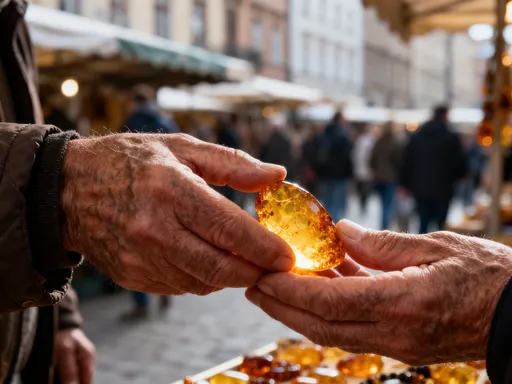
The district’s market is a sensory experience. Stalls overflow with dried herbs, olives in brine, hand-stitched leather slippers, and bundles of fresh mint. Prices are low, transactions are quick, and bargaining is rare — this is commerce among neighbors, not performance for visitors. A butcher sharpens his knife between cuts of lamb, a spice seller measures cumin into brown paper cones, and an elderly woman carefully selects figs, pressing each one for ripeness. There’s a dignity in this routine, a quiet pride in doing things well, even when no one is watching.
To walk through Jellaz is to practice respect and restraint. This is not a place to photograph freely or wander with a sense of entitlement. Instead, it invites quiet observation — a nod to a shopkeeper, a polite request before taking a photo, a willingness to move slowly and absorb. When approached with humility, Jellaz reveals unexpected beauty: a painted door with intricate geometric patterns, a courtyard blooming with bougainvillea, a shared smile between neighbors. It reminds us that authenticity isn’t found only in scenic views, but in the ordinary moments that make up a life.
Street Art & Urban Expression in Mutuelleville and El Kabaria
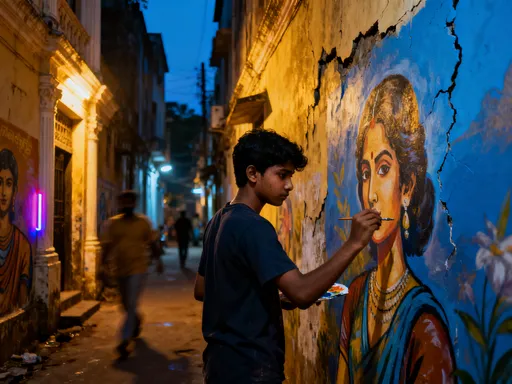
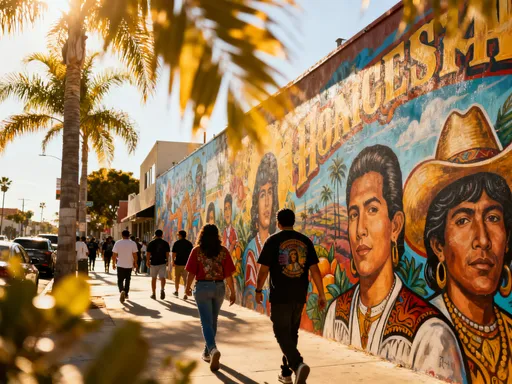
In the northern suburbs of Mutuelleville and El Kabaria, a quiet revolution is unfolding — not in politics, but in paint. Once-overlooked walls, blank facades, and concrete barriers have become canvases for a new generation of Tunisian artists. Murals depicting birds in flight, abstract patterns inspired by zellige tilework, and portraits of local heroes now adorn alleyways and underpasses. This is not vandalism; it is vision — a way for youth to claim space, express identity, and beautify neighborhoods long ignored by city planners.
The street art here carries subtle messages. Some pieces honor Tunisia’s role in the 2011 revolution, with symbols of freedom and unity woven into bold compositions. Others celebrate cultural heritage — a woman weaving a traditional blanket, a fisherman casting a net, a calligraphic rendering of a poetic verse. Unlike the overtly political graffiti seen in some global cities, Tunis’s urban art tends to be reflective rather than confrontational, emphasizing resilience, memory, and hope.
What makes this movement remarkable is its grassroots nature. Many artists work without permits, using donated paint or repurposed materials. Some collaborate with schools or community centers to involve children in mural projects. Others simply paint at night, adding color to forgotten corners. Their work transforms sterile environments into places of meaning — a blank wall becomes a story, a dull staircase becomes a landmark.
For travelers, exploring these districts requires sensitivity. Not every painted wall is public property; some belong to private homes or businesses. The best approach is to walk with awareness, avoid touching artwork, and refrain from intrusive photography. When possible, engaging with local artists — even through simple conversation — can deepen understanding. Some neighborhoods host informal open studios or cultural events, offering a chance to learn about the creative process firsthand. In doing so, visitors don’t just see art — they connect with the people who make it, and the communities that embrace it.
The Forgotten Architecture of Colonial-Era Avenues
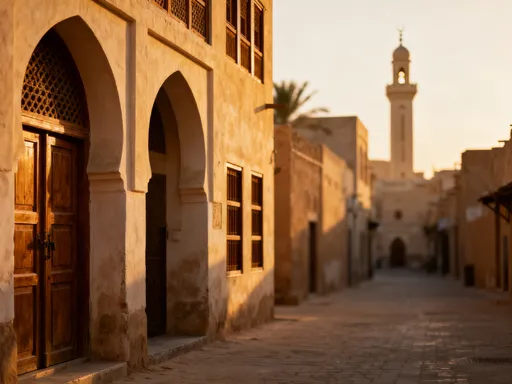
As the morning sun rises over Tunis, it casts a golden glow on the wide boulevards that once symbolized colonial ambition. Avenue Habib Bourguiba, often crowded with traffic and protests in the daytime, takes on a different character in the early hours. Empty sidewalks reflect the soft light, and the façades of 1930s buildings emerge in sharp relief. These structures — a blend of French neoclassical design and North African ornamentation — stand as quiet witnesses to Tunisia’s complex evolution. Columns, arches, and wrought-iron balconies speak of European influence, while geometric tilework, shaded courtyards, and arched doorways reflect local traditions.
Walking these avenues at dawn offers a rare stillness. The city is not yet awake, and the noise of horns and construction has not begun. Instead, there is the sound of footsteps on stone, the rustle of palm trees, and the distant call of a street cleaner’s cart. Light catches the peeling stucco of a former bank building, revealing layers of paint that tell their own history. A clock tower, long stopped, still stands at the corner of a silent square. These are not ruins, but survivors — buildings that have adapted to new roles in an independent Tunisia.
What’s striking is how these structures have been repurposed. A former colonial administrative office now houses a government ministry. A grand theater hosts Arabic-language plays and music festivals. A once-exclusive café welcomes students and civil servants alike. There is no attempt to erase the past; instead, there is integration. The architecture is not celebrated for nostalgia, but respected for its craftsmanship and endurance.
For the traveler, these avenues offer a lesson in historical continuity. They show how cities carry their pasts not as burdens, but as foundations. The blend of European and Maghrebi design is not a contradiction, but a dialogue — one that continues in the way Tunisians live, build, and imagine their future. To walk these streets is to witness that dialogue in stone, tile, and shadow — a conversation that needs no translation.
Practical Tips for Exploring Tunis Off the Beaten Path
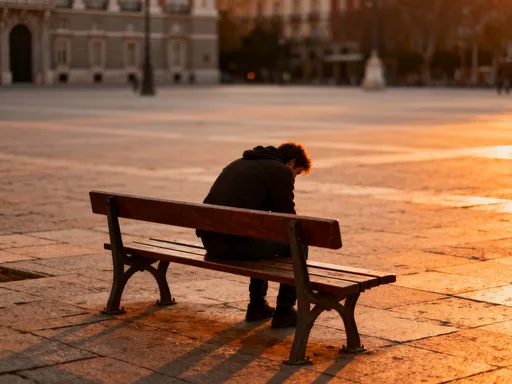
Discovering the hidden layers of Tunis requires more than a map — it demands mindset. The first rule is to move slowly. Rushing from site to site will only reinforce surface impressions. Instead, allow time to linger — to sit on a park bench, to watch how people interact, to notice small details like the pattern of a floor tile or the way light falls on a staircase. The most meaningful experiences often come from stillness, not speed.
Timing matters. Mornings, especially between 7 and 9 a.m., are ideal for walking. Streets are quieter, temperatures are cooler, and daily life is just beginning. Markets are busiest in the late morning, making it a great time to observe commerce in action. Evenings offer a different charm — families gather in parks, cafés light up, and the city takes on a softer, more intimate mood. Avoid midday during summer months, when heat can be intense.
Navigation is straightforward thanks to Tunis’s light rail system, known as the TGM, and an extensive network of louages — shared minivans that follow fixed routes. The tram is clean, reliable, and connects key neighborhoods. Louages are less formal but efficient; simply say your destination to the driver, pay a small fare, and take a seat. For walking, a basic map app works well, though many streets are not clearly marked. Don’t hesitate to ask locals for directions — most are friendly and willing to help, especially if you greet them politely in Arabic or French.
Cultural etiquette is essential. Dress modestly, especially in residential areas — loose clothing that covers shoulders and knees is appropriate. Always ask permission before photographing people. When entering a home or religious site, remove your shoes if requested. Greetings matter: a simple “Salam alaikum” (peace be upon you) opens doors more effectively than any guidebook. Small gestures — a smile, a thank you, a patient pause — build trust and connection.
Safety in Tunis is generally good for visitors who exercise common sense. Stick to populated areas, avoid isolated streets at night, and keep valuables discreet. Petty theft is rare but possible in crowded markets. Women traveling alone should feel confident walking in daylight hours, particularly in neighborhoods like La Marsa or Belvédère. The key is awareness, not fear — being present, observant, and respectful.
Finally, let go of the checklist mentality. Tunis is not a destination to be conquered, but a city to be experienced. There is no single “must-see” list that captures its essence. Instead, prioritize curiosity over completion. Let a scent, a sound, or a fleeting moment guide your path. The real treasures of Tunis are not listed in guidebooks — they are found in the spaces between, in the quiet corners where life unfolds, unscripted and true.
The real magic of Tunis lies not in curated sights, but in its unpolished, breathing cityscape — where every cracked wall and quiet square holds memory and meaning. It is a city that reveals itself gradually, to those willing to look beyond itineraries and embrace the beauty of urban authenticity. To walk its hidden streets is not just to travel, but to understand — to see a place not as a postcard, but as a living, evolving home. In a world of staged experiences, Tunis offers something rare: the chance to witness life as it is, not as it’s sold. And in that honesty, there is profound beauty.